
Passive House Design and PHPP modelling
PHPP (Passive House Planning package) is an energy balance tool used to model all aspects of a building to assess how it will perform once constructed.
We can build a PHPP model from early pre planning stages to help with the design process, improving the efficiency of the form and assessing overheating risk associated with glazing, shading and orientation. This can then be modified over time once further details construction methods and specifications have been decided on.
Modelling a design in PHPP is not just for clients looking to certify a building to the Passive House standard. It is a great tool to inform on potential space heating loads and to review overheating risks which can potentially happen in any new build or retrofit. It can help direct the selection of construction techniques and insulation requirements for walls, roofs, windows etc. to determine where best to allocate funds for the best performance return.
Passive House principals and PHPP modelling are also used for the AECB building standards as well as the LETI retrofit standard, but each has its own slightly varying target criteria.
If you are interested in building a certified Passive House we can assist and work with an approved certifier to gain certification of the project.
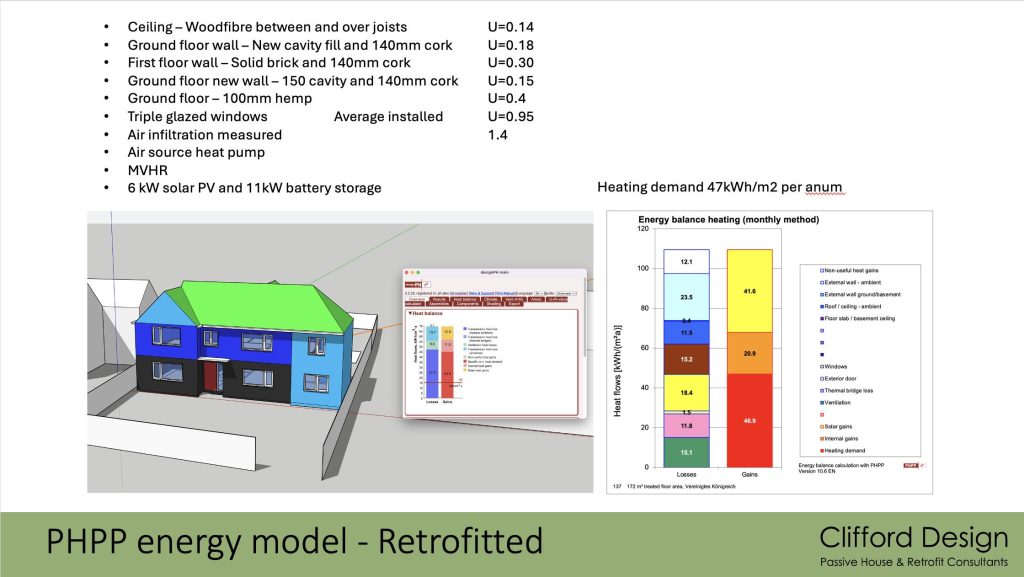
PHPP model of a listed building
A PHPP (Passive House Planning Package) Energy balance model of a historic listed building was built to test options for improvements to the building fabric and help size an air source heat pump. Each different colour in the model represents a variation in building fabric and performance value. Site measured air infiltration was also entered into the model as a baseline figure and to demonstrate how improvements in airtightness would impact energy consumption. With older and historic buildings energy efficiency improvements can only be undertaken if there is an acceptable risk to building fabric and historical significance.


