
Air leakage testing and leak detection
Air infiltration (draughts) can account for up to 40% of heat loss from a home. Air leakage testing and leak detection are essential parts of a retrofit assessment as air infiltration is often one of the cheapest issues to fix and can have some of the greatest benefits. Making a home more airtight must always be combined with a robust ventilation strategy to ensure that good air quality is maintained without undue build up of moisture, Carbon dioxide or VOC’s. The objective is to make the building airtight and then ventilate as required and not have ventilation that changes depending on environmental conditions.
Whilst air leakage testing gives a quantitive result that can be compared to Building regulation or Passive House standards, leak detection using thermal imaging or smoke pens shows where the problems are actually occurring.
- Energy efficiency: Uncontrolled air leakage can account for a significant portion of heat loss. Without measuring it, you can’t accurately predict energy savings from retrofit measures.
- Comfort: Drafts and uneven temperatures are often caused by leakage pathways.
- Performance gap: Many buildings underperform compared to design expectations. Testing exposes this gap and helps target improvements.
- Moisture risk: Warm, moist air leaking into colder parts of the structure can condense and lead to damp, mould, and fabric degradation.
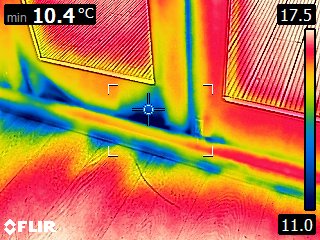
Air leak under door
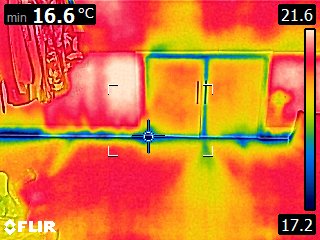
Leaks around cupboard and skirting
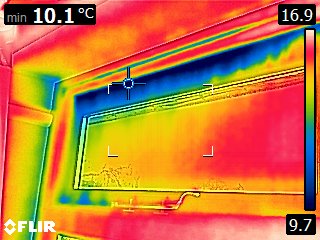
Leaking window
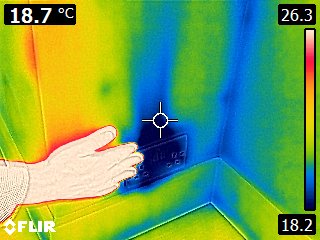
Leaking through socket
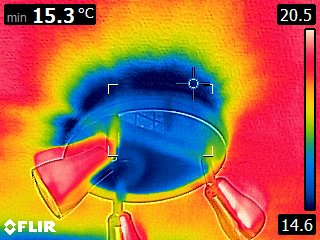
Leak around light fitting
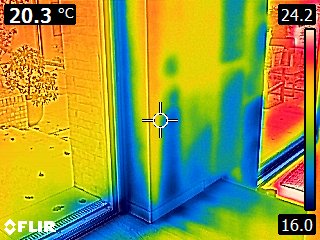
Leaks into stud wall
Air leak detection during build
To ensure a high level of airtightness for your new build or retrofit project it is essential to undertake air leakage detection at least once during the build process as well as testing at completion. An air test after first fix and once the windows are installed allows any leaks to be traced and sealed before the building fabric is closed up and decorated. It is extremely difficult, disruptive and expensive to seal leaks once a project has been completed.
Clifford Design can come to site and run an air test fan enabling easy detection of points of air ingress with the use of smoke pens.